


For many brands, Amazon is the obvious place to start selling a new product. It offers reach, trust, logistics, and a ready-made customer base. You can move fast, test demand, and scale without building much infrastructure of your own. And for a while, that works very well.
But Amazon’s convenience comes at a cost most brands realize too late. You’re not trying to sell one product and be done with it. You want to build a sustainable business. And that is a long game.
Data. That’s the secret sauce
When you build your business entirely on Amazon, you’re outsourcing more than sales and fulfilment. You’re outsourcing understanding. You are giving up your data — something only your own app can gather for you. And this data is a goldmine of business growth.
Data is one of the most powerful tools a founder can have. When you own your platform, every click, every hesitation becomes a signal. Things they buy together, things they buy regularly, things they keep in their cart for long, everything tells a story.
These patterns, taken together, can tell you not just what is happening, but also why. It tells you what motivates people, what frustrates them, what keeps them coming back, and sometimes…even what they haven’t told you, or anyone! For example, and this is not something you may want to do, but data can be so precise that Target actually predicted which customers were pregnant before they even announced it, just by observing their shopping patterns.
Here’s what data can do for you
Once you’re past the early phase, you need more than totals and revenue reports. You need to know why people behave the way they do, what drives engagement, what causes hesitation, and what opportunities you might be missing. With your own app, you can start answering those questions with precision.
See why your customers really act the way they do
It’s easy to assume that sales numbers tell the full story. They don’t.
Behind every click, pause, or abandoned cart is a hidden reason that reveals how your product or messaging lands. Using first-party data to understand your customer relationship can transform the way you prioritize development, marketing, and engagement.
- Where friction hides: Hesitations, repeated clicks, or abandoned steps reveal points of confusion or missing information. These small signals show exactly where the user experience could be improved.
- What customers actually love: Identify the features or products that delight users versus those that clutter or confuse. This allows you to focus energy on what really matters.
- Unexpected opportunities: Users often engage with your product in ways you never intended, revealing untapped possibilities for new features, products, or services.
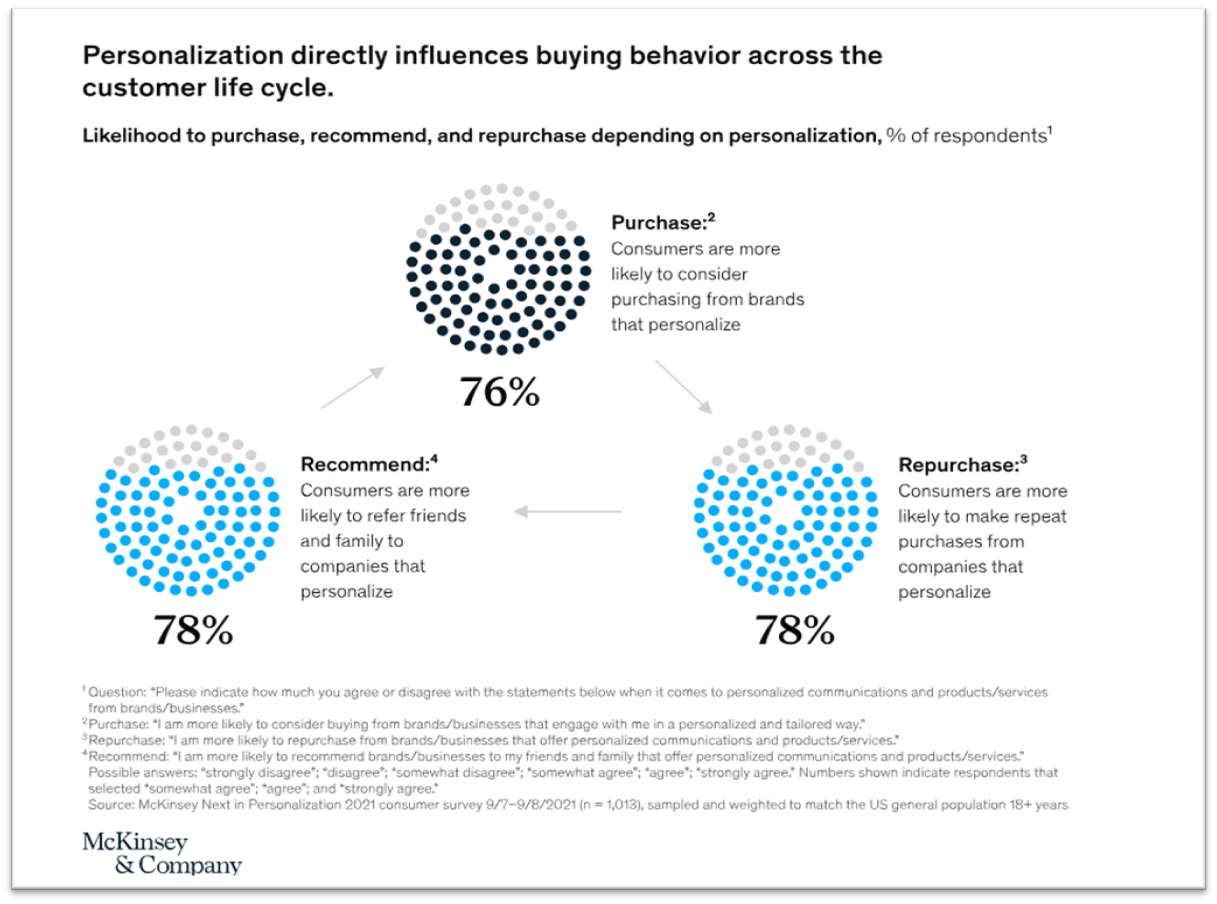
Source: McKinsey&Company-The value of getting personalization right—or wrong—is multiplying
Spot problems before they become crises
Waiting for complaints or revenue drops to reveal issues is risky. Data lets you detect warning signs early, giving you time to intervene before minor issues escalate into lost customers or costly mistakes. Predictive insights are what separate reactive businesses from those that grow with confidence.
- Predict churn early: Drops in engagement, changes in behavior, or hesitant patterns can reveal which users may leave, allowing you to act proactively. Sending the right notifications or a personalized offer can turn a possible churn into a long-term customer.
- Identify your most valuable users: Recognize who drives your growth. You thought you were aiming for working millennials but you found a surprise market in school-goers (it happens)! On-demand grocery delivery brand Gorillas analysed ordering behavior across London and discovered neighborhood-specific shopping patterns, which guided targeted promotions and improved local engagement.
- Optimize inventory and delivery: Data can reveal which products often sell out first, which areas consistently have delayed deliveries, or which fulfillment routes waste time. Acting on these insights reduces cost, prevents stockouts, and keeps customers satisfied.
Deliver experiences that feel personal, not generic
Customers no longer respond to generic messaging. They expect experiences that reflect their behavior, preferences, and intentions. Owning your own app allows you to deliver relevance in real time, creating trust and engagement while improving conversions.
- Real-time personalization: Show users the product, content, or option they’re most likely to respond to in the moment, based on their recent activity or preferences.
- Understand different needs: Different users interact differently — some want quick, low-effort decisions, others explore and compare. Data helps you serve them in the way that feels natural for each type.
- Refine messaging continuously: Test how images, descriptions, and promotions perform and adjust in real time, so your communication stays relevant and resonates with what customers actually want.
Learn the truths about your market before anyone else does
Digital interactions are more than clicks. They are a window into culture, consumer behavior, and even the broader market. Data reveals trends and opportunities that can inform everything from product development to supply chain decisions, all of which are crucial for anyone hoping to build a business that lasts. Founders who pay attention are the ones who anticipate change instead of chasing it.
- Spot emerging trends early: You can detect subtle shifts in what customers value, for instance, a move toward simpler designs, eco-friendly choices, or experience-driven products. These insights let you adapt your offerings, messaging, or launches before competitors even notice the change.
- Optimize operations: By tracking behavior and usage patterns, you can anticipate demand, adjust inventory levels, and streamline delivery routes. This prevents stockouts, reduces wasted effort, and ensures customers get what they want, when they want it, without unnecessary costs.
Build confidence in every decision you make
Owning your app is all about clarity, foresight, and control. When your decisions are informed by real behavior rather than guesswork, growth stops feeling like random luck or something you could lose anytime. It actually starts feeling like something you can drive. With in-app data you can
- See patterns clearly: By observing how users navigate, engage, or hesitate, you can detect which ideas are working, which need adjustment, and where opportunities lie.
- Make informed bets: Instead of relying on intuition alone, you can test new products, campaigns, or features knowing how your audience actually behaves. This increases the chances of success and reduces wasted effort.
- Scale with certainty: Growth stops being a series of experiments and starts becoming a repeatable process. With consistent insight into user behavior and response, you can expand confidently, anticipate challenges, and refine your strategy along the way.
Conclusion
Building your own app is not a replacement for marketplaces like Amazon. The convenience, reach, and infrastructure they offer are invaluable, especially in the early stages of a business. Yet, relying solely on those platforms comes with a hidden cost: the inability to see your customers clearly.
Having your own app changes that. It turns every interaction into insight, and every signal into an opportunity to refine your business. It allows founders be proactive not reactive, informed by real behavior rather than assumptions or averages.
In other words, Amazon can help you start, but your own app helps you see, understand, and shape the future of your business with confidence. That is the difference between scaling blindly and scaling intelligently.

 For business inquiries
 For jobs inquiries